
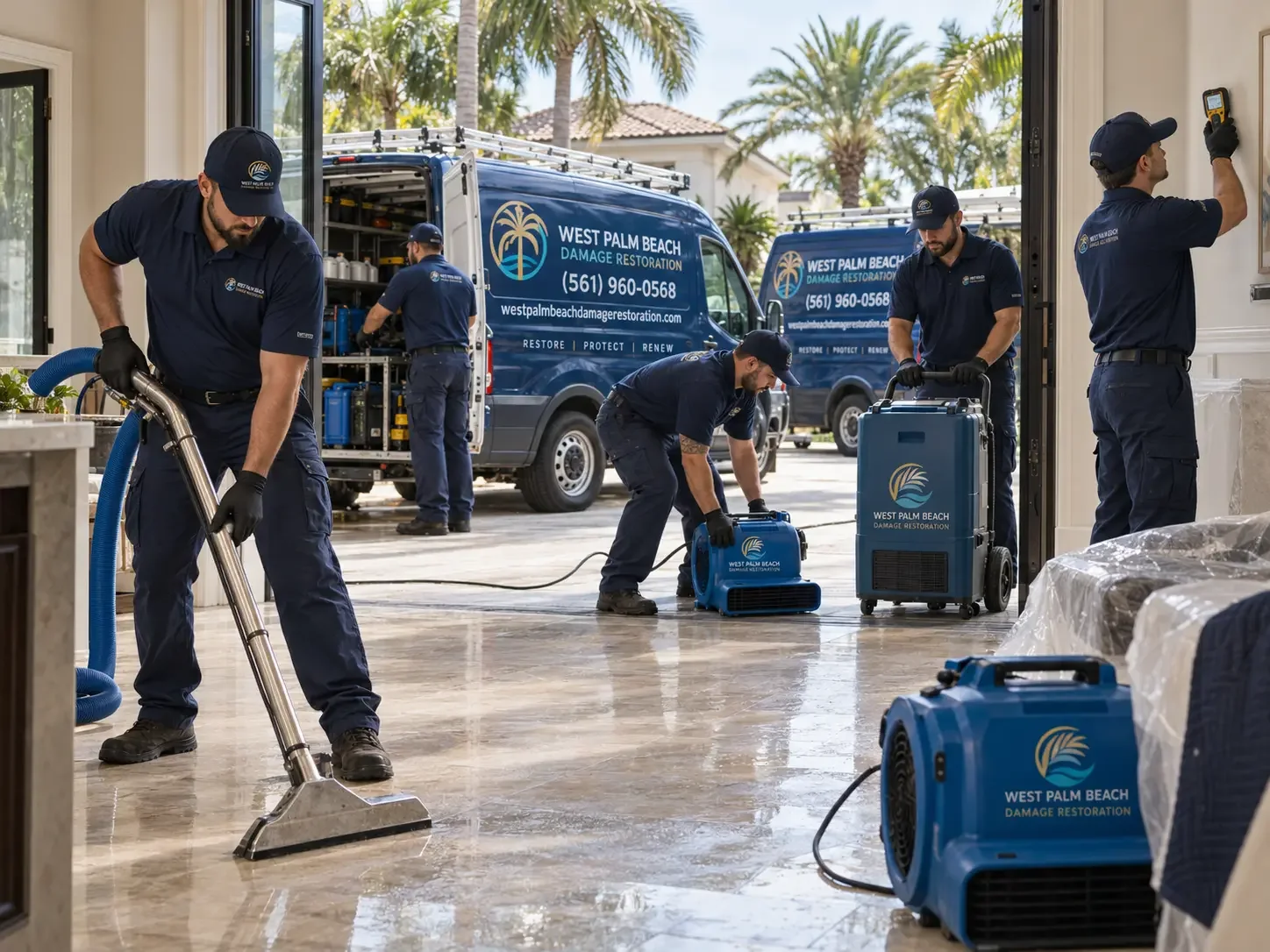
Water damage restoration in Wellington
Water damage restoration in Wellington can involve a residence, a larger equestrian property or a managed home with several affected spaces. A room count alone does not show how much material is wet. The inspection needs to identify the source, the affected footprint and the access required to reach it.
West Palm Beach Damage Restoration accepts Wellington emergency inquiries 24/7 from our West Palm Beach base. Call (561) 960-0568 with the address, property type and source information. Explain gates, occupied areas and any arrangements needed to keep restoration work separate from animals or property operations.
Water damage services in Wellington
Larger properties need clear boundaries
Water can cross an open living area, reach a closet or collect at a floor transition without affecting every building on the property. Identify the specific structure and rooms when arranging help. A main house, guest accommodation and separate utility space should not be treated as one undifferentiated loss.
For a large floor plan, point out the source and every visible sign, including rooms below. A useful inspection records the wet area and material layers. The estimate should not automatically substitute total property size for affected square footage.
Equestrian access and occupied-site planning
If horses or other animals are present, discuss service access, equipment routes and work-zone separation with the responsible manager. Hoses, cables, debris and changing access can interfere with normal use. The plan should reflect the actual work location rather than assume the property is empty.
Restoration of a water-damaged living area is different from specialized work in agricultural or animal facilities. Describe the building’s use during the call and confirm whether the requested scope is appropriate. Any utility or structural hazard must be evaluated before cleanup proceeds.
Canals, lakes and the source of the loss
Nearby water features do not tell you why a room became wet. Plumbing, appliance discharge, rain through an opening and water entering from outside all need an accurate account. Record observed entry points and avoid guessing a flood category from the address.
Where outside water entered, contamination can affect porous-material decisions. Where a supply line failed, the plumbing repair and building drying still need separate attention. The source and material condition guide the scope, not a generalized assumption about the community.
Scheduling around travel and seasonal use
During busy property use or while an owner is away, there may be several people involved in access and approval. Nominate one person who can receive updates and coordinate the other contacts. A manager should know which rooms are restricted and when follow-up inspection is expected.
If a leak is discovered after a period without occupancy, state what is known about timing and what is uncertain. A last inspection date is useful evidence, but it does not prove when the release began. Record the discovery and source-repair details without inventing a duration.
A clear path from damage to recovery.
Know what happens next, what the work addresses and what remains to be completed.
- 01First contact
Identify the building and responsible contact
Give the Wellington address, the specific structure affected and the person authorized to approve work. Explain gate access, occupancy and animal-management considerations before equipment is brought onto the property.
A defined starting point - 02Property assessment
Map the affected rooms and layers
The assessment should follow visible water and concealed migration rather than use the full estate size. Accessible flooring, walls and adjoining spaces are checked, with limitations and necessary openings explained in the scope.
An inspection-based scope - 03Restoration work
Separate restoration from daily operations
Safe equipment routes and work-area boundaries are planned alongside extraction and cleanup. The water source and contamination determine which materials can remain and whether another trade must correct the active release.
Controlled cleanup and treatment - 04Review & handoff
Maintain access for monitoring and repairs
Arrange follow-up entry and updates to the property manager. Review the drying evidence and remaining repair tasks before rooms return to ordinary use. Do not treat equipment pickup as completion of all rebuilding work.
A documented next step
Average Water Damage Restoration Cost in Wellington
Estimate the affected building area rather than the full property or parcel. The scenarios shown here use 200 square feet with no add-ons. More structures, difficult access or additional materials need a separate on-site scope.
| Example scope | Low | Average | High | What drives the price |
|---|---|---|---|---|
| Clean water, 200 sq ft | $1,000 | $1,200 | $1,400 | Extraction and drying allowance; $1,000 minimum applied |
| Gray water, 200 sq ft | $1,000 | $1,350 | $1,700 | Higher cleanup allowance; no replacement add-ons |
| Black / sewage water, 200 sq ft | $1,400 | $2,000 | $2,600 | Contaminated-water allowance; removal and repairs may add cost |
Multiply the affected square footage by the selected water rate: $3.75–$7.00 for clean, $4.50–$8.50 for gray or $7.00–$13.00 for black or sewage water. Each water-job endpoint has a $1,000 floor in this planning model.
What changes the estimate?
- The affected square footage and the path into adjoining assemblies.
- The water category and which materials can be retained.
- Drywall, carpet, hardwood, cabinets or ceiling work added to the scope.
- After-hours response, concealed access and mold discovered during inspection.
Insurance may respond to a covered sudden water or fire incident, subject to terms, limits and deductibles. Confirm the affected structure and scope with the insurer. Do not assume a mold allowance or separate-building repair is included without review.
Plan around the affected building with our water restoration cost calculator. Obtain a property-specific scope before authorizing work.
Organize the claim by building and task
For a Wellington property, organize the claim by affected structure, room and task. Keep living-area damage distinct from equipment or other property operations. The insurer may need a clear account of the building use, source and damaged contents rather than a single total estimate.
Ask about policy limits, the deductible and whether separate structures or contents have different coverage. Sudden accidental losses may be covered, but maintenance issues and outside flooding raise other questions. Confirm billing arrangements and approval requirements before assuming a manager’s authorization also means insurance approval.
Information for the property manager
- Specific building and its residential or other use.
- Gate, manager and owner authorization arrangements.
- Animal separation and safe equipment or debris routes.
- Follow-up access during travel or busy property use.
Make the property’s operating plan part of the handoff
A larger property may have an owner, manager, occupant and several service providers involved at once. Give the restoration inquiry one responsible contact, then clarify the roles of everyone else. This helps the team obtain source information and access without contradictory instructions from different people.
Mark the specific work area in the property description. A leak in guest accommodation does not automatically involve the main house, and a residential cleanup scope does not automatically include a separate operational building. Ask which structures were inspected and which remain outside the agreement.
Equipment placement should preserve safe routes appropriate to the occupied site. Discuss normal movement, animals and any area that cannot be used for debris or storage. Safe separation is a practical planning matter and should be decided before the work changes familiar paths.
For follow-up checks, make sure the appointed contact can provide access and approve any necessary change. If the owner will travel, arrange how findings and estimates are reviewed. An inaccessible room can leave a moisture question unresolved even after the first extraction visit.
At handoff, separate the dry-material observations from finish rebuilding and source maintenance. Record any room that remains restricted and the provider responsible for its next task. Keeping the record by building and stage is more useful than describing a whole estate as either fully damaged or fully restored.
Water damage questions in Wellington
Can you assess one building on a larger property?
Describe the affected structure and its use when you call. The scope should be based on that building’s water loss, not the overall parcel size. Confirm access, safe power and the authorized contact for the specific work area.
How should restoration work be separated from horses?
Discuss animals, normal access routes and management needs before the visit. Cables, hoses and debris need a controlled work area. Specialized agricultural spaces may call for a different provider, so confirm the building use and requested scope during the inquiry.
Does being near a canal prove the loss is contaminated floodwater?
No. Report the observed water entry and source. An indoor supply failure is different from outside water entering the building. The assessment and insurer need the actual account rather than an assumption based on a nearby canal or lake.
Can my property manager authorize work while I travel?
Make the authorization clear in writing and identify the contact who receives updates. Provide safe access arrangements and approval limits. Confirm who can approve added scope if the inspection finds concealed water beyond the initially reported rooms.
Will a big house automatically cost more?
Affected area, materials and access determine the work. The calculator uses the entered wet square footage and selected allowances, not total house size. A large floor plan can still create longer inspection or equipment routes that need an on-site assessment.
What if no one knows when the leak began?
Record the discovery time and the last known dry condition if available. Do not infer a precise start time. Odor, material damage and concealed moisture may affect the investigation, so share observations and any remote alerts or repair records.