
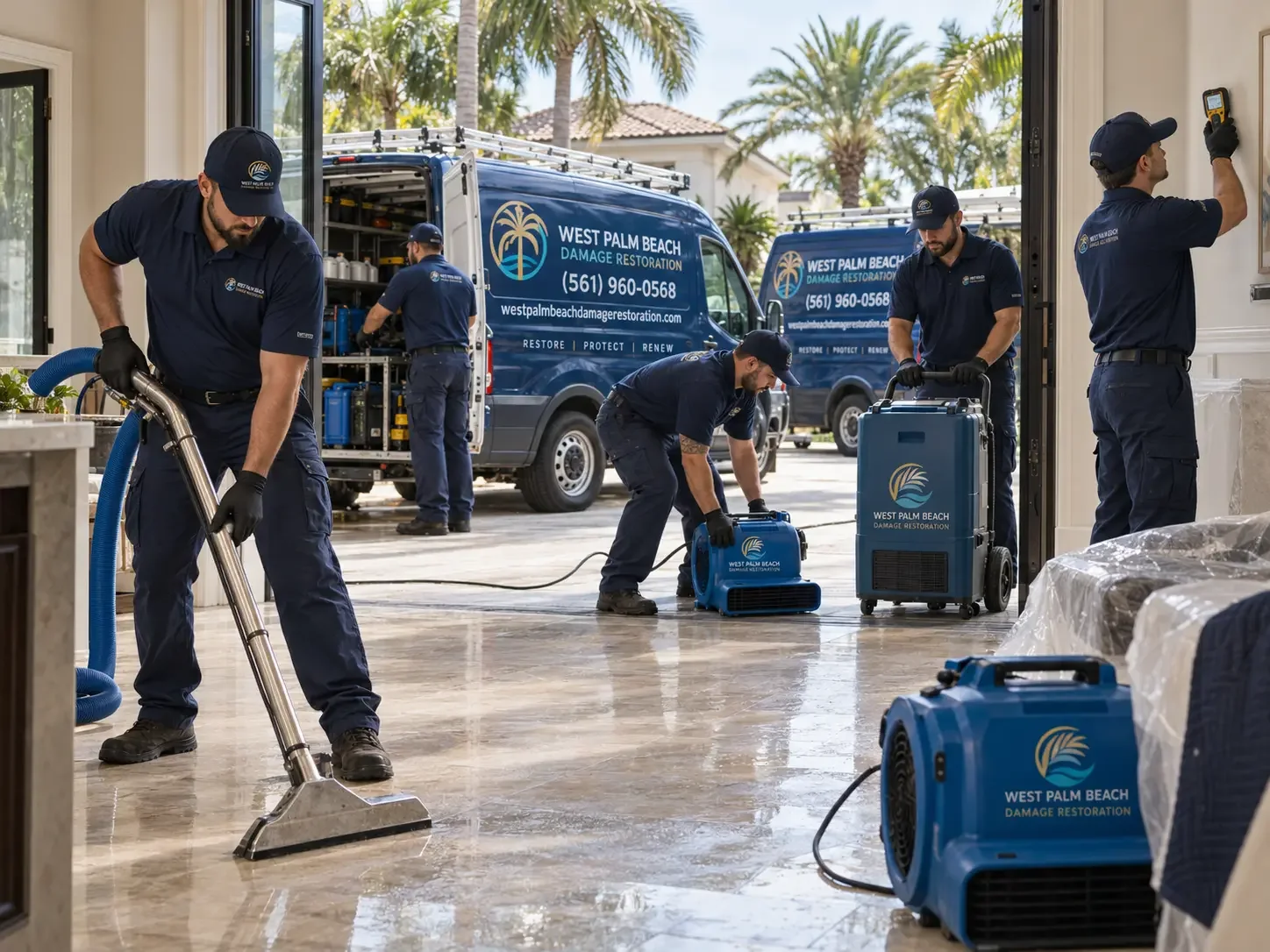
Water damage restoration in Riviera Beach
Water damage restoration in Riviera Beach can involve a detached home, a business near the port area or a Singer Island condominium with several affected floors. Access, shared assemblies and ownership boundaries need attention alongside extraction. The first stain is a starting point, not proof that the source or wet area is limited to one unit.
West Palm Beach Damage Restoration accepts Riviera Beach service inquiries 24/7 from our West Palm Beach address. Call (561) 960-0568 with the building, unit and floor information. Provide a management contact when elevators, common areas or neighboring units may be involved.
Water damage services in Riviera Beach
High-rise water travel needs coordinated access
A plumbing or fixture failure can affect a ceiling below, a shared chase or another room away from the source. The inspection may need entry to more than one space. Coordinate through management so the source and downstream damage can be assessed without relying on one occupant’s view.
Service-elevator rules, loading access and equipment placement may affect the plan. Explain those requirements during the first call. The restoration scope should identify both assessed areas and any spaces that remain inaccessible, rather than imply that every level has been checked.
Shared elements and unit finishes are different questions
Who owns a wall component is not always the same question as whether it is wet. Management, owners and insurers may need to review responsibility while the material assessment proceeds. Obtain the correct authorization before openings or removal in a shared assembly.
Document the affected room, material and observation clearly. A factual record helps the parties discuss scope without assigning blame before the source is confirmed. Keep personal contents separate from building repairs when organizing estimates and photos.
Waterfront and business losses require a source account
At waterfront properties, explain whether the water entered from outside, through a damaged opening or from an interior line. Proximity to the coast does not determine the water category. When outside intrusion is possible, contamination needs evaluation before porous materials are dried in place.
For a commercial site, identify operating areas, inventory and equipment that require protection. Safe cleanup access can differ from normal customer or delivery routes. Arrange the authorized manager and tell the team if utilities or business operations have been interrupted.
Control the route through common and occupied areas
Debris and wet belongings should not be carried through clean spaces without a plan. Equipment hoses and cables also need routes that maintain safe movement. An occupied high-rise loss can require coordination beyond the affected unit’s doorway.
Arrange follow-up entry for moisture checks, not just the first visit. The final handoff should describe retained and removed materials, drying observations and repair tasks. Returning an elevator or corridor to normal use is not the same as completing every interior finish repair.
A clear path from damage to recovery.
Know what happens next, what the work addresses and what remains to be completed.
- 01First contact
Arrange building-level coordination
Give the address, unit, floor and manager contact. Explain elevator, parking and service-entry requirements. Report any source known in another unit and clarify the person authorized to approve inspection and openings.
A defined starting point - 02Property assessment
Inspect the reported source and downstream area
Accessible ceilings, walls and floor edges are checked for the loss footprint. The scope should distinguish confirmed findings from areas awaiting access, with neighboring-unit coordination documented where necessary.
An inspection-based scope - 03Restoration work
Plan cleanup without affecting clean common areas
Extraction, debris handling and equipment routes are organized around the building’s access and contamination needs. The source trade may need a separate appointment, and retained assemblies require a suitable drying plan.
Controlled cleanup and treatment - 04Review & handoff
Hand off the material record and remaining repairs
Review the drying observations, removed components and source correction with the authorized contact. Keep building finishes and personal contents distinct, and identify any repair or further assessment still required.
A documented next step
Average Water Damage Restoration Cost in Riviera Beach
Elevator access, concealed migration and shared assemblies may complicate the actual scope. These examples hold the affected area at 200 square feet and exclude add-ons. Use the ranges for planning, then ask for an inspection-based estimate.
| Example scope | Low | Average | High | What drives the price |
|---|---|---|---|---|
| Clean water, 200 sq ft | $1,000 | $1,200 | $1,400 | Extraction and drying allowance; $1,000 minimum applied |
| Gray water, 200 sq ft | $1,000 | $1,350 | $1,700 | Higher cleanup allowance; no replacement add-ons |
| Black / sewage water, 200 sq ft | $1,400 | $2,000 | $2,600 | Contaminated-water allowance; removal and repairs may add cost |
The base model budgets $3.75–$7.00 per square foot for clean water, $4.50–$8.50 for gray water or $7.00–$13.00 for black or sewage water. Its minimum is $1,000; shared-building logistics still need inspection-based assessment.
What changes the estimate?
- The affected square footage and the path into adjoining assemblies.
- The water category and which materials can be retained.
- Drywall, carpet, hardwood, cabinets or ceiling work added to the scope.
- After-hours response, concealed access and mold discovered during inspection.
The insurer reviews cause, coverage and deductible for sudden water or fire losses. Mold can carry restrictions or exclusions. In shared buildings, review the relevant policies and responsibilities; an online range does not determine which party pays for each component.
Try the water restoration planning tool, then request an inspection that records affected units, access and material quantities.
Separate common elements, unit finishes and contents
A Riviera Beach shared-building claim benefits from room and unit-specific documentation. Keep the source account, downstream observations and access limitations explicit. Ask management and the insurer which policy covers common elements, unit finishes and personal contents.
A sudden loss may have coverage subject to the applicable terms, while flooding or gradual leakage can involve different exclusions. Confirm payment responsibility and any direct billing arrangement before authorization. An insurance review does not remove the need to address safe access and urgent protective work.
Prepare for coordinated building access
- Building, unit and floor details with manager authorization.
- Service elevator, loading route and common-area rules.
- Other units or levels where water has been reported.
- Business contents and occupied areas requiring separation.
Maintain a building-level record without losing unit detail
A shared-building loss needs enough detail for management to coordinate the work, but each inspected unit and assembly should remain identifiable. Use unit numbers, levels and room descriptions rather than one general statement that the building is wet. That makes access limits and proposed tasks easier to review.
Keep service-route planning in the scope discussion. Equipment delivery, debris removal and follow-up checks may use common areas whose normal rules still matter. Confirm permission before those routes are changed, and explain which spaces need separation from occupants or customers.
Where the source is believed to be elsewhere, record what was reported and what has actually been verified. An incomplete inspection should not be used to assign liability. Management and insurers may review responsibility while the restoration team explains material conditions and practical cleanup needs.
Contents inventories should identify the owner and location of affected items where relevant. Business equipment, tenant belongings and unit finishes can have different handling and approval requirements. No one should infer disposal authority merely from being given access to the room.
The final handoff should distinguish the completed stage from building-wide recovery. A dry inspected unit does not prove every neighboring assembly was checked. State remaining access, source or repair needs clearly so the responsible manager can organize the next authorization.
Water damage questions in Riviera Beach
Can a Singer Island condo leak affect several floors?
Water can move into the level below or through shared assemblies. Management coordination may be needed to inspect the full reported path. The restoration record should say which areas were assessed and which still require access.
What information do you need for a high-rise visit?
Provide the building address, unit and floor, management contact, service-elevator rules and permitted loading or parking location. Establish who can approve work. Access arrangements can materially affect scheduling even when the visible loss is small.
Will you decide which neighbor is responsible?
The assessment records material conditions and available source evidence. Responsibility and coverage need review by owners, management, insurers or other appropriate advisers. Restoration observations should not substitute for a liability determination.
Can work be planned around a business operation?
Describe the occupied areas, operating hours, sensitive equipment and access limits. The scope needs to reflect safe work separation and source control. Confirm the appropriate manager authorization before restoration equipment or debris routes affect the business.
Does waterfront water damage always involve sewage cleanup?
No. The actual source and exposure determine the approach. An indoor supply loss differs from outside rising water or a drain backup. Describe what happened and let the inspection evaluate contamination rather than assigning a category from the address.
Who approves work in a common wall or corridor?
Coordinate with building management and the relevant owner before openings, disposal or equipment placement. A unit occupant’s report does not automatically authorize work on every shared element. Record the approved scope and contact for any added work.