
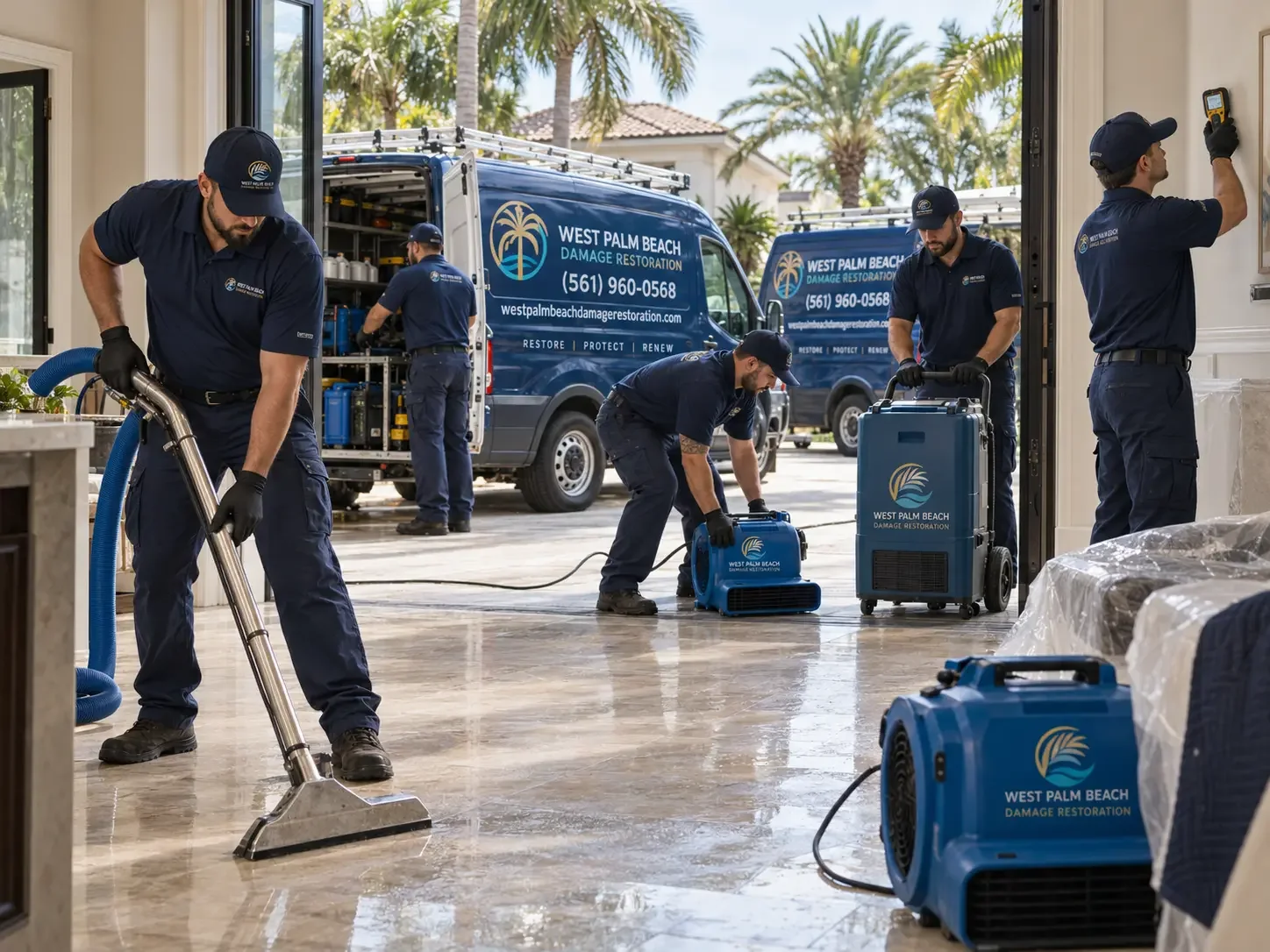
Water damage restoration in Royal Palm Beach
Water damage restoration in Royal Palm Beach should begin with the individual home, not an assumption about the subdivision. A leak behind a kitchen appliance, a plumbing failure in a bathroom and outside water entering at a door can leave different materials wet. The inspection connects the reported event to the rooms and layers actually affected.
West Palm Beach Damage Restoration serves Royal Palm Beach from our listed West Palm Beach address. Call (561) 960-0568 for 24/7 emergency inquiries. Tell us what happened, which rooms are wet and whether the source or access conditions are still changing.
Water damage services in Royal Palm Beach
Follow water across connected living spaces
Single-family layouts can allow water to move beneath continuous flooring and into nearby bedrooms or closets. The most obvious puddle may be only one portion of the wet area. Record every sign you notice rather than concentrating only on the failed fixture.
During inspection, flooring transitions and cabinet edges can help reveal where moisture traveled. The proposed work should explain the affected boundary and any further access needed. A room should not be excluded solely because its surface looks normal at the doorway.
Lakes and canals are context, not a diagnosis
Royal Palm Beach has water features that can prompt questions after heavy rain, but the cause at your property still needs evidence. Report whether water rose outside, entered through a damaged opening or came from an interior system. Different sources can be present together.
Do not assume a wet carpet is safe to dry in place because the water appeared clear. Outside intrusion can bring contamination, while a clean supply loss has other retention considerations. The material assessment should follow the observed source and exposure.
Renovated kitchens and layered flooring
Earlier repairs or remodeling can leave more than one floor layer or a cabinet assembly that blocks drying access. Tell the team about recent flooring installation, appliance replacement and any previous leak. That history can explain why a small visible loss reaches concealed materials.
Cabinet bases made from different materials may respond differently to wetting. Swollen composite panels are not automatically restored by running a fan. Ask which parts are expected to dry, which need removal and how that decision affects the later repair scope.
Protecting the rest of an occupied home
A cleanup area can disrupt the route between bedrooms, bathrooms and the kitchen. Discuss safe paths and the rooms that need to stay separate before equipment is placed. Children and pets should not use wet or contaminated spaces as a shortcut.
Keep a simple inventory of belongings moved for access. Drying should not turn into undocumented disposal of furniture or contents. If the loss affects a rental or association-managed property, clarify who approves work and who communicates with the occupants.
A clear path from damage to recovery.
Know what happens next, what the work addresses and what remains to be completed.
- 01First contact
Describe the rooms and known source
Share the address, event and first visible signs. Explain any active leakage and relevant renovation history. If the source is unsafe to approach, arrange the appropriate repair or emergency help before entering the affected area.
A defined starting point - 02Property assessment
Check continuous finishes and concealed edges
The wet boundary may extend under adjoining flooring or behind cabinets. Ask for an assessment that records those observations and explains any opening required to reach the assembly.
An inspection-based scope - 03Restoration work
Organize extraction and a practical drying area
Water removal is followed by material and contamination decisions. Equipment routes should account for occupied rooms, safe power and access needed by the source-repair trade.
Controlled cleanup and treatment - 04Review & handoff
Review completion before finish work
Discuss the readings, retained components and removed materials before flooring or cabinets are repaired. Keep source correction, drying completion and cosmetic rebuilding visible as separate parts of the recovery plan.
A documented next step
Average Water Damage Restoration Cost in Royal Palm Beach
The scope should distinguish extraction and drying from flooring, cabinet or ceiling replacement. These base scenarios apply the same rates and minimum as our planning calculator. They do not include repair add-ons or constitute a quote.
| Example scope | Low | Average | High | What drives the price |
|---|---|---|---|---|
| Clean water, 200 sq ft | $1,000 | $1,200 | $1,400 | Extraction and drying allowance; $1,000 minimum applied |
| Gray water, 200 sq ft | $1,000 | $1,350 | $1,700 | Higher cleanup allowance; no replacement add-ons |
| Black / sewage water, 200 sq ft | $1,400 | $2,000 | $2,600 | Contaminated-water allowance; removal and repairs may add cost |
Base extraction and drying allowances use clean water at $3.75–$7.00 per square foot, gray water at $4.50–$8.50 and black or sewage water at $7.00–$13.00. The model minimum is $1,000, with replacement materials added separately.
What changes the estimate?
- The affected square footage and the path into adjoining assemblies.
- The water category and which materials can be retained.
- Drywall, carpet, hardwood, cabinets or ceiling work added to the scope.
- After-hours response, concealed access and mold discovered during inspection.
For coverage, describe the actual event and ask the insurer about its terms and deductible. Sudden accidental water or fire damage may be covered, but mold can have specific limits or exclusions. The price table does not establish claim approval.
Adjust area and material choices in the water damage estimate tool, then ask which allowances fit the inspected assembly.
Connect the source repair with the loss record
Royal Palm Beach homeowners should preserve the distinction between source repair and resulting water damage. Keep the plumbing or appliance findings with the restoration estimate and discovery timeline. For an association or rental, establish the responsible parties before a claim document is sent on someone’s behalf.
The insurer reviews sudden loss, gradual leakage and outside flooding under the applicable terms. Ask about limits and the deductible, and clarify the contractor payment agreement. A calculator range helps planning but does not serve as an insurer-approved repair scope.
Useful observations before cleanup
- Connected floor coverings and adjoining rooms.
- Prior renovations that may hide an additional wet layer.
- Observed outside water entry versus an indoor release.
- Safe household paths and landlord or association approval.
Use the first inspection to define the repair boundary
A single-family loss can create disagreement about how far flooring or cabinets need to be removed. The decision should be explained through the water source, assembly condition and required access. Ask for the wet-area observations before treating the widest proposed replacement as the inevitable outcome.
Where a continuous finish extends into another room, restoration and matching are separate considerations. An inspection may define the affected material while a repair proposal raises a broader appearance question. Keep those reasons distinct so you understand which work addresses moisture and which addresses the finished result.
Contents movement should also be clear. Ask which items need temporary relocation, where they will be placed and whether any cleaning or disposal is proposed. A wet rug should not be stored on a dry floor without considering the effect on that space.
During monitored drying, discuss changes to equipment or ventilation with the team. Moving a device to reduce noise can alter the plan or create an access hazard. Household routines matter, but equipment placement should be adjusted with the material condition and safe power in view.
Before repairs start, confirm what remains outside the cleanup estimate. Plumbing, appliance replacement, cabinet reinstatement and decorative finishes may be separate tasks. A written handoff should name those tasks rather than leave the homeowner to discover them after equipment has been collected.
Water damage questions in Royal Palm Beach
Can a kitchen leak affect the next room?
It can, particularly beneath continuous flooring or along wall edges. Report all stains, softened finishes and odors you notice. The inspection should establish the wet boundary rather than assume that the failed appliance marks the edge of the loss.
Does a nearby lake mean the water came from outside?
No. The source should be supported by observed entry, timing and any trade findings. Describe what happened at your property. The cleanup and coverage decisions need the cause of the loss, rather than a general description of the neighborhood.
Can I keep using an unaffected bedroom?
Discuss occupancy and work-area separation with the team. Access, utilities and contamination affect the answer. A bedroom route crossing an affected space may create a problem even if the bedroom itself appears dry.
Should remodeled floor layers be mentioned?
Yes. Earlier flooring or cabinet work can affect access and moisture travel. Share what you know about the assembly and prior leaks. The scope should explain retained layers and any removal needed to address the water beneath them.
Can a landlord arrange the inspection for a tenant?
Provide the authorized owner or manager contact and coordinate access with the occupant. Clarify who may approve work and which rooms are affected. Restoration planning and the parties’ repair responsibilities should be handled explicitly rather than assumed.
Will drying alone fix swollen cabinets?
Not necessarily. The panel construction, damage and contamination matter. Composite parts can suffer changes that drying does not reverse. Ask for a material-specific assessment and distinguish cleanup from any cabinet replacement or finish repair.