
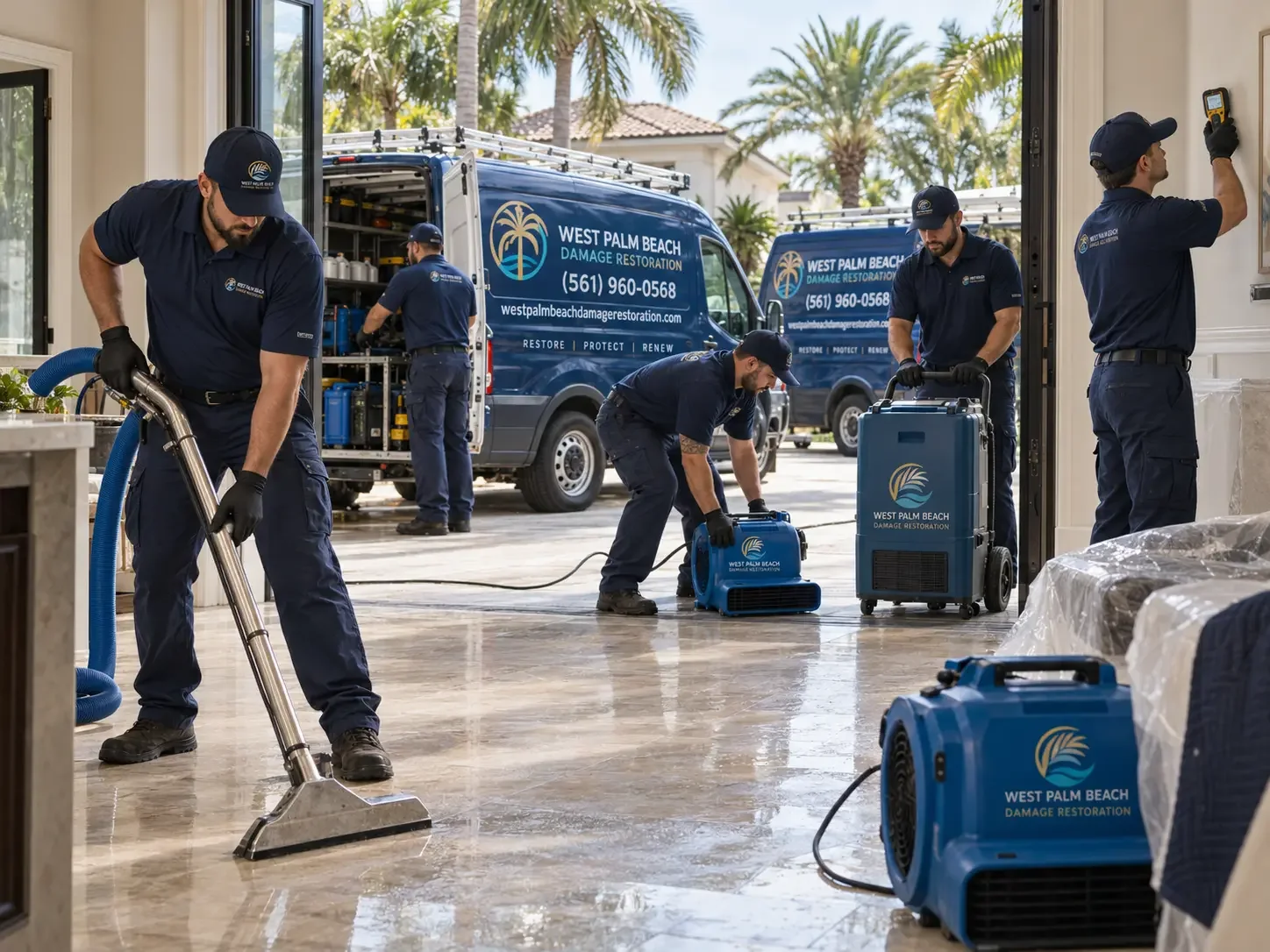
Water damage restoration in Lake Worth Beach
Water damage restoration in Lake Worth Beach can require careful assessment of older finishes and later alterations in the same home. A bungalow, apartment or remodeled residence may conceal more than one wall or floor layer. Age is useful context, but the cleanup decision must follow the water source and current condition.
West Palm Beach Damage Restoration serves Lake Worth Beach from West Palm Beach. Call (561) 960-0568 for 24/7 emergency inquiries with the street address, affected spaces and any known plumbing or roof issue. Point out original finishes or recent renovations you want considered during the assessment.
Water damage services in Lake Worth Beach
Original materials and later changes need separate attention
A home may contain older woodwork or plaster alongside updated bathrooms, new cabinetry and replacement flooring. The visible finish can hide a different assembly beneath it. Known renovation details help the team understand where water may have traveled and what access is available.
Do not assume that old plumbing caused the loss simply because the property is older. A plumber’s findings and the observed source are more useful than an age-based guess. Keep the reported failure, moisture assessment and proposed repair aligned.
A wet bungalow floor can conceal several layers
Water at a baseboard or floor transition can reach materials below the visible covering. Rugs and furniture can also hide the spread. An inspection should consider the accessible assembly and explain any limitation before deciding the floor has dried.
Preserving an original component may require material-specific assessment or a specialty provider. The scope should state which elements can remain, what access is needed and why removal is proposed elsewhere. Preservation should not mean closing a finish over unresolved moisture.
Coastal weather and the actual entry point
The location near the coast can prompt concern after storms, but it does not establish the cause at every address. Record whether rain came through an opening, water rose outside or a fixture failed indoors. Each reported source can change contamination and insurance questions.
A ceiling mark after rain may need a roofing assessment and interior drying. Ground-level outside water can require contaminated-material decisions. If both occurred, describe them separately instead of compressing the event into one assumed source.
Permanent repair should follow source correction
Repeated staining is a reason to review the source and retained materials before another coat of paint is applied. A repaired pipe or roof does not automatically dry the earlier wet assembly. Concealed insulation, framing or flooring can need assessment after the release stops.
Where permanent changes affect a regulated or historic property, ask the appropriate local authority about review requirements. Emergency cleanup and long-term alterations are different stages. Keep the documentation clear so the next contractor understands what was removed and what remains to be addressed.
A clear path from damage to recovery.
Know what happens next, what the work addresses and what remains to be completed.
- 01First contact
Share the source history and material priorities
Give the address, discovery timeline and known plumbing or roofing findings. Identify original finishes, recent renovations and prior stains so the assessment can consider the specific assemblies rather than rely on building age.
A defined starting point - 02Property assessment
Check the wet layers before choosing removal
Accessible floor edges, walls and ceiling areas are assessed. Ask for an explanation of retained components and necessary openings. Inspection limits should be documented where an original finish blocks direct access.
An inspection-based scope - 03Restoration work
Clean and dry with the assembly in mind
Water category and material condition guide the cleanup. Controlled drying addresses retained surfaces, while contaminated or damaged layers may need removal. Coordinate the source repair so new water does not interrupt the plan.
Controlled cleanup and treatment - 04Review & handoff
Prepare the handoff for appropriate repair
Review observations and remaining moisture questions before rebuilding. Confirm any local review requirements for permanent changes and keep specialty finish work distinct from extraction, cleaning and drying.
A documented next step
Average Water Damage Restoration Cost in Lake Worth Beach
Layered construction and specialty finishes can alter the repair scope. The table uses standard base calculator examples without material add-ons. Its midpoint values are mathematical illustrations, not measured local pricing averages.
| Example scope | Low | Average | High | What drives the price |
|---|---|---|---|---|
| Clean water, 200 sq ft | $1,000 | $1,200 | $1,400 | Extraction and drying allowance; $1,000 minimum applied |
| Gray water, 200 sq ft | $1,000 | $1,350 | $1,700 | Higher cleanup allowance; no replacement add-ons |
| Black / sewage water, 200 sq ft | $1,400 | $2,000 | $2,600 | Contaminated-water allowance; removal and repairs may add cost |
Use $3.75–$7.00 per square foot for a clean-water scenario, $4.50–$8.50 for gray water and $7.00–$13.00 for black or sewage water. The $1,000 minimum does not establish the replacement cost of an original or layered finish.
What changes the estimate?
- The affected square footage and the path into adjoining assemblies.
- The water category and which materials can be retained.
- Drywall, carpet, hardwood, cabinets or ceiling work added to the scope.
- After-hours response, concealed access and mold discovered during inspection.
A covered sudden water or fire event may have insurance support under the policy. Gradual conditions, mold limits and deductibles can change the result. Discuss the cause and finish scope with the insurer before using the planning range as expected reimbursement.
Review base and replacement choices in our water damage calculator. Specialty or layered finishes still need a measured repair proposal.
Describe the assembly without guessing the cause
For Lake Worth Beach properties, document the failed component and damaged assembly rather than attributing the event to age alone. Include source-trade findings, safe photos and descriptions of original or specialty materials. Ask the insurer what evidence it requires for repair versus replacement.
Coverage for sudden damage may differ from wear, ongoing leakage or outside flooding. Policy terms and deductibles remain relevant even if the finish is expensive to match. Discuss billing, repair approvals and payment responsibility before using a planning calculator figure as the expected reimbursement.
What to tell the inspection team
- Original finishes and known renovation or floor layers.
- Confirmed source information from the relevant repair trade.
- Recurring stains and the timing of earlier repairs.
- Any review needed before permanent property alterations.
Compare repair proposals by assembly and purpose
Older-looking and newly finished rooms can contain different layers in the same assembly. When comparing proposals, ask which layer is wet, which can be retained and what access is required. The explanation should be based on the inspected condition rather than a general belief that old homes always require replacement.
Finish matching can broaden a repair proposal beyond the moisture footprint. That may be a separate practical question, but it should be identified as such. A cleanup estimate and a decorative reinstatement estimate should not hide their different purposes under one unexplained total.
Keep the source-trade report with the restoration observations. If a plumber replaced a failed fitting, record that task separately from drying the surrounding wall. If a roof repair addressed an opening, the interior ceiling can still require assessment before it is closed.
Where an original detail is important, discuss specialist evaluation before disposal. Some materials may be restorable and others may not. The team should not promise preservation without access, contamination and condition information, but it should understand your priorities early in the process.
At completion, keep a concise record of retained components, removed layers and remaining repair tasks. That helps a future contractor understand what sits beneath the finish. If staining returns, the earlier source and assembly record can support a focused investigation rather than another cosmetic cover-up.
Water damage questions in Lake Worth Beach
Does an older home automatically need more demolition?
No. The scope should follow affected materials, access and condition. Older and renovated assemblies may need closer investigation, but age alone does not justify broad removal. Ask what evidence supports each proposed opening or replacement.
Can original wood or plaster be retained?
Preservation depends on water source, material condition and the ability to assess or dry the assembly. Identify important finishes early. Some components may require a specialist; others may need removal. A blanket promise would not be appropriate before inspection.
Should I assume old pipes caused the damage?
Report the observed leak and any plumber’s findings instead of assuming a cause from the age of the home. An appliance connection, roof opening or other source can produce similar signs. Accurate source documentation helps both restoration planning and the claim record.
Can water hide under newer flooring?
It can, especially where another layer remains below. Tell the team about known installation history and wet edges. The inspection needs to address the assembly, not only the appearance of the new floor surface.
What if a ceiling stain returns after painting?
The source or retained assembly may still need attention. Record when the mark returns and any rain or plumbing activity linked to it. Repainting is a finish task and should follow an assessment of the moisture and source repair.
Does historic-property work require approval?
Permanent alterations may have local review requirements depending on the property and proposed work. Check with the appropriate authority rather than assuming an emergency-cleanup authorization covers rebuilding. The restoration scope should distinguish mitigation from later changes.