
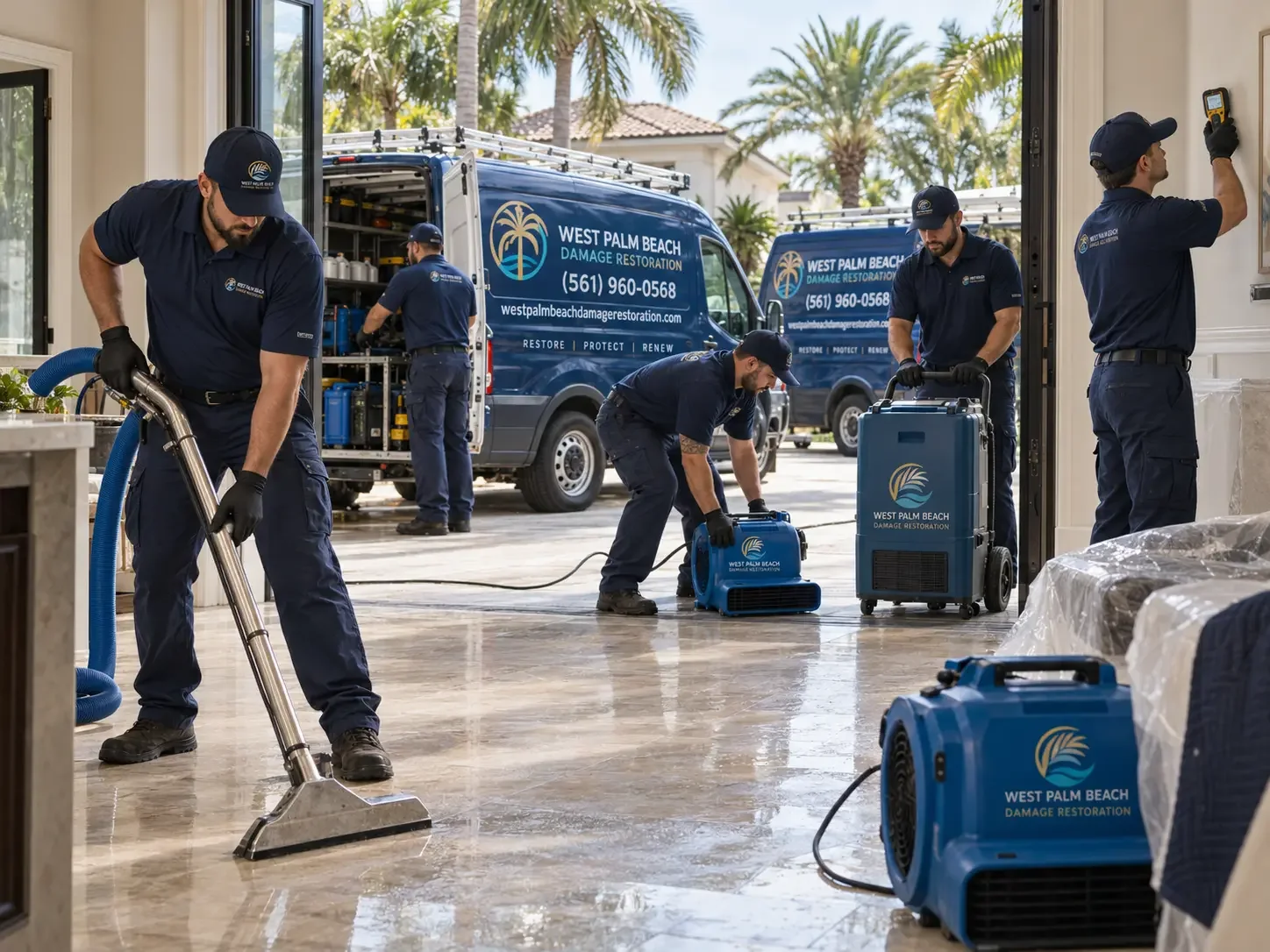
Water damage restoration in Palm Beach
Water damage restoration in Palm Beach needs to consider both the wet materials and the finishes surrounding them. An oceanfront residence, a condominium and a home near Worth Avenue may have very different access rules and repair priorities. The property’s condition determines the scope; a valuable finish is a reason to assess carefully, not a reason to overlook concealed moisture.
West Palm Beach Damage Restoration serves Palm Beach from our West Palm Beach business address. We do not claim a separate office in town. Call (561) 960-0568 for 24/7 emergency inquiries, and give the property address, water source and any management or access requirements.
Water damage services in Palm Beach
Protect decorative finishes without trapping moisture
A wet assembly can include stone, woodwork, plaster, custom cabinets and finishes that need different handling. Document their condition and point out anything you want evaluated for preservation. A proposed opening should explain why access is needed and how nearby surfaces will be protected.
Keeping a finish in place is useful only if the underlying assembly can be addressed. Water beneath a floor or behind decorative panels may require more investigation than the visible stain suggests. Discuss material-specific repair options before approving a broad demolition scope.
Older construction and earlier renovations
Palm Beach properties can include older architectural details alongside later plumbing and interior renovations. Layered walls and changed room layouts can conceal water paths. Tell us about known alterations, prior leaks and recent work; those details can help narrow the inspection.
Do not assume the nearest roof section caused a ceiling mark. Water may follow framing or come from plumbing above the room. A source trade and moisture assessment need to connect the evidence before the ceiling is repaired. Historic or regulated work may also need review with the town before permanent alterations.
Condominium access and waterfront property questions
For a managed building, arrange the contact who can approve entry and explain elevator, parking and service-access rules. A leak inside one unit may reach the ceiling below or a common wall. Inspection boundaries should follow the reported loss rather than stop at an ownership line.
For waterfront properties, report what actually happened: rain through an opening, a failed pipe or water rising from outside. A coastal address alone does not classify a loss. Cleanup and coverage decisions should be based on the water source and materials contacted.
A repair plan that respects the occupied home
When only part of the property is affected, discuss how the work area will be separated and which routes will remain available. Furniture, artwork and sensitive belongings may need an inventory before movement. Equipment placement should allow safe access without sending hoses or cables through unnecessary areas.
Temporary protection, extraction, drying and permanent repairs may require different authorizations. Keep those stages visible in the scope so a quick emergency decision does not become an unexplained rebuilding agreement. Identify the person responsible for each approval, particularly when the owner is away.
A clear path from damage to recovery.
Know what happens next, what the work addresses and what remains to be completed.
- 01First contact
Describe the loss and the finish priorities
Identify the room, source, first discovery and any decorative materials that need careful assessment. Provide the owner or manager contact and explain gate or building access before the visit is scheduled.
A defined starting point - 02Property assessment
Assess adjoining and concealed assemblies
The inspection should consider wet boundaries around custom cabinetry, floor transitions and rooms below the source. Any proposed opening needs a material-based reason and a plan for protecting the surrounding finishes.
An inspection-based scope - 03Restoration work
Remove water and control the drying area
Extraction is paired with the contamination assessment. Retained assemblies need a drying plan suited to their construction, with safe equipment routes and separation from the rest of the occupied property.
Controlled cleanup and treatment - 04Review & handoff
Review measurements and repair responsibilities
Before finishes are restored, discuss remaining moisture questions, source-trade work and town or management approvals. Confirm which tasks have ended and which specialist or contractor is responsible for the next stage.
A documented next step
Average Water Damage Restoration Cost in Palm Beach
Sensitive finishes and concealed access can change the work even when the visible wet area is small. Use these unselected 200-square-foot calculator examples as a starting point, then request a material-specific estimate for the property.
| Example scope | Low | Average | High | What drives the price |
|---|---|---|---|---|
| Clean water, 200 sq ft | $1,000 | $1,200 | $1,400 | Extraction and drying allowance; $1,000 minimum applied |
| Gray water, 200 sq ft | $1,000 | $1,350 | $1,700 | Higher cleanup allowance; no replacement add-ons |
| Black / sewage water, 200 sq ft | $1,400 | $2,000 | $2,600 | Contaminated-water allowance; removal and repairs may add cost |
The planning rates are $3.75–$7.00 per square foot for clean water, $4.50–$8.50 for gray water and $7.00–$13.00 for black or sewage water. A $1,000 minimum applies before considering the final scope for specialty finishes.
What changes the estimate?
- The affected square footage and the path into adjoining assemblies.
- The water category and which materials can be retained.
- Drywall, carpet, hardwood, cabinets or ceiling work added to the scope.
- After-hours response, concealed access and mold discovered during inspection.
A sudden water or fire loss may qualify under the policy, but exclusions, limits and deductibles still apply. Mold coverage can be restricted. Ask about the specific cause and specialty-finish scope rather than assume the whole estimate will be reimbursed.
Explore finish and cleanup allowances in the water damage cost calculator, then request a scope based on your inspected property.
Keep specialty finishes and coverage separate
For a Palm Beach loss, keep the source account, finish inventory and restoration scope together. Custom materials and specialty repair may need separate pricing or approval. Ask the insurer which documents it needs before assuming a standard replacement allowance covers the finish in your home.
A covered sudden pipe failure can raise different questions from outside flooding or a longstanding leak. Your deductible, limits and exclusions still apply. Ask whether direct contractor billing is available and read the payment agreement; claim assistance is not a promise that the insurer will pay every item.
Details to share before the visit
- Building-management contact and permitted service entrance.
- Sensitive stone, plaster, woodwork and custom cabinetry.
- Known alterations or earlier leakage in the same assembly.
- Rooms below or beside the source that may need assessment.
Decisions to make before custom finishes are rebuilt
When the emergency stage is organized, make a list of the finish details that influence repair. Matching a stone section, reinstating decorative trim and replacing standard wallboard are different tasks. The cleanup team should explain the condition found, while a suitable finish specialist may need to assess the final appearance and matching work.
Ask whether the proposed estimate includes protection, removal, drying, contents movement and permanent repair. A single total can conceal different scopes. If one contractor proposes retaining a panel and another proposes removal, compare their reasons and access assumptions before comparing the prices alone.
For an owner who is not on site, establish how photographs and approvals will be shared. Give the authorized contact a clear list of decisions they may make. Additional opening or disposal should not rely on an assumption that anyone with a key can approve the work.
Keep the property record after completion. The source repair, inspected wet area, retained materials and rebuilt finishes should be understandable to a later contractor. If another stain or odor appears, the earlier record can help frame the next investigation without pretending that every new concern is the same loss.
Finally, discuss the difference between room access and finish completion. An area may still need specialist repair after the drying stage is complete. That remaining work should be described at the handoff, with the relevant owner or management approvals identified.
Water damage questions in Palm Beach
Can you preserve expensive stone or wood finishes?
We discuss preservation as part of the material assessment. Value alone cannot determine whether an assembly can remain. The water source, concealed moisture, damage and access all matter. Point out sensitive finishes early so the scope can explain any proposed removal or specialist assessment.
Do you have an office in Palm Beach?
Our listed business address is 1897 Palm Beach Lakes Blvd, West Palm Beach, FL 33409. Palm Beach is a service area. Call to confirm availability at your property and ask for a current arrival estimate based on access and conditions.
Does a condo leak require management involvement?
Usually management is an important contact where common areas, elevators or neighboring units are involved. Clarify who can authorize entry and openings. The ownership and policy questions should be reviewed separately from the inspection of where the water traveled.
Can stormwater and a roof leak have different insurance treatment?
Yes, the reported cause can affect which coverage applies. Describe the water entry accurately and keep the evidence. The insurer decides coverage under the policy; a waterfront address or storm date does not settle that question.
Will every historic finish need replacement?
No blanket assumption is appropriate. The condition, construction and access need assessment, and some items may need a specialist. Confirm any town review requirements before permanent changes. Drying decisions and finish-matching decisions should be recorded separately.
Can work be arranged while the owner is away?
Provide an authorized local contact and clear written approval arrangements. Share key, gate and building instructions without placing them in a public message. The scope should state who receives updates and who can approve additional work found during inspection.